

With the rise of AI and the ongoing discourse around the threat it has on creativity, jobs and society as a whole, I firmly believe that it will never possess good taste the way that a human does. And this is why I don’t think it’s as much of a threat to creatives as people think. Taste is felt, not learned. The smartest AI in the world can learn everything there is to know about taste and style, but the feeling will never be there.
I think about taste often. How some people just have it, how some try to obtain it like it’s a skill to be learned, where it comes from, if it’s nature or nurture etc. But good taste isn’t like learning an instrument, or any other hobby where, if you spend enough time doing it, you’ll be good at it. I roll my eyes when I see Substacks about how to have good taste and step by step guides to achieving it. These articles, likely written by people who lack taste it in the first place, make me shutter at the idea of people thinking it’s something you can read about in a 2 minute article or study like it’s a school subject. When it comes to AI, sure it can do a million things better than we can, but I’ve played around with it, I’ve even used it for some important functions at Sporty & Rich. But one thing I come back to time and time again is its apparent lack of taste and inability to decipher what looks good and what doesn’t.
This past year, I decided to try using AI to replace our ecom photos— both product shots and on model photos. Shooting ecom is one of the most costly things in our business. On average, it costs us hundreds of thousands of dollars to produce each season. For a business that is still very much boot-strapped and survives every cash flow cycle by the skin of our teeth, you better believe I’m trying to cut costs however and wherever I can. This was one area I thought we could try to save on but after having seen the result, I’m now going back to producing our ecom with a full team of humans, because AI could never achieve the results that my IRL team could.
Our current ecom photos have a certain lifelessness to them. They’re flat, the styling is mediocre and the images are too “perfect” in a bad way. The models look dead in the eyes and don’t have any organic movement whatsoever. The images are empty and void of any feeling or emotion. Sure, it might have saved me an upwards of $200k+ each season (that’s $400k+ a year), but the cost of not having strong visuals as a brand that is entirely based on its visual identity is simply just too high.
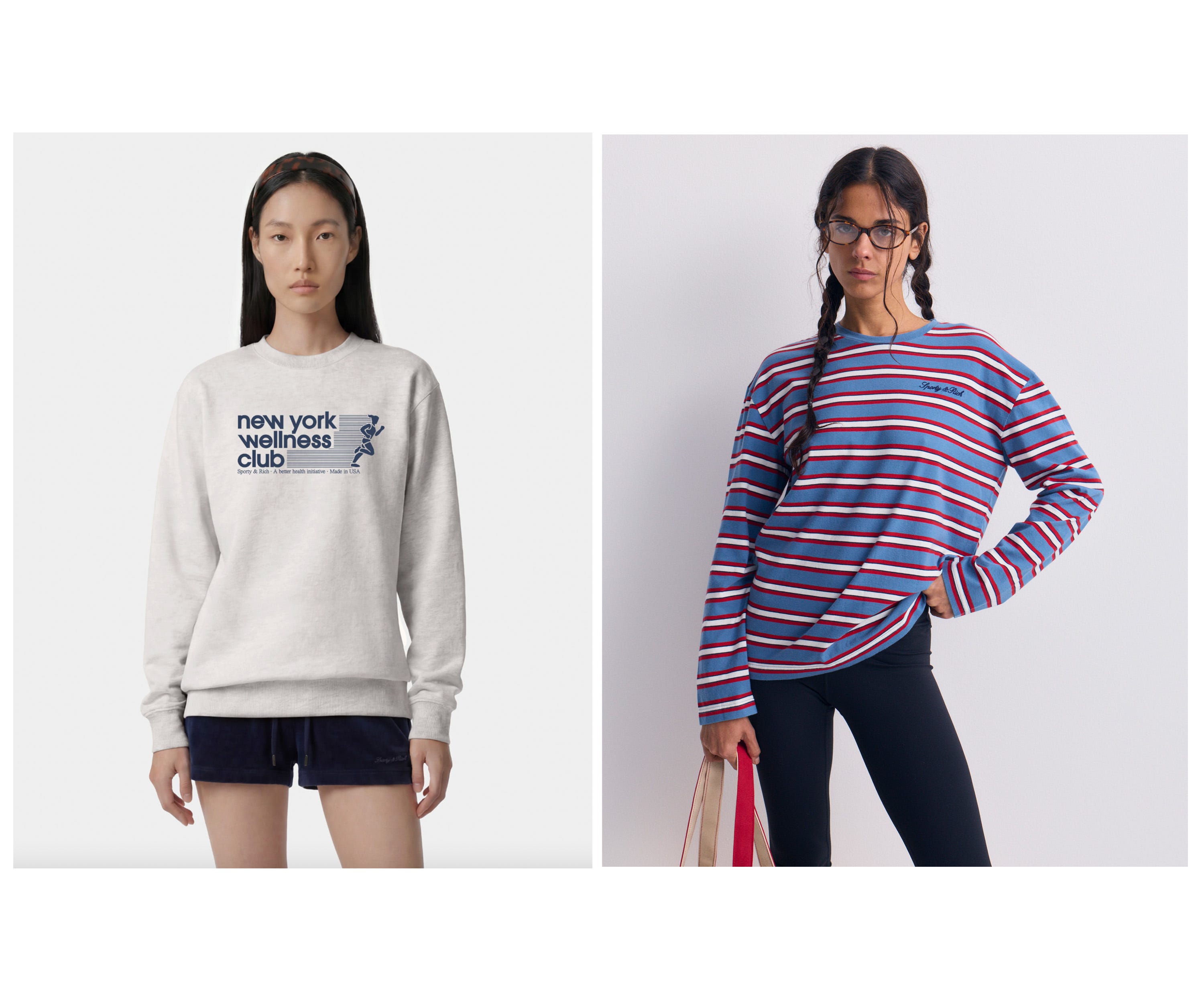
I like AI for some things when it comes to visuals. Mostly for small, fun things and to humor myself like replicating an old ad with our logo, or making a dumb flyer that only me and my friends will see. But at a high level, it still has an extremely basic sense of making things look and feel good and there is a clear disconnect on what it deems visually appealing.
Because of this, good taste is more valuable and rare than ever. After all, people who truly have good taste don’t follow trends, they set them. More than this, they set them without trying to, it happens by just being themselves and liking what they like, not because an algorithm or AI told them to. AI can anticipate trends based on gathering data and analyzing the consumer market, but it’s never going to be able to visually implement or express something as well as a human can.
Today, Pinterest, Instagram and now AI have made everyone think they have the qualifications to be creative directors or “creative consultants”- whatever the fuck that means. Too many times have I watched people attempt careers out of reposting images, slapping them onto Canva or building brand decks on Claude, thinking they’re suddenly a connoisseur of taste and can therefore direct a campaign or create strategies for brands. I launched a career off of a mood board, but even I know that good taste goes so much deeper than compiling images and reposting someone else’s curated content. And while mood boards and references have been a central part of Sporty & Rich, I attribute the brand’s success to so much more than that alone.
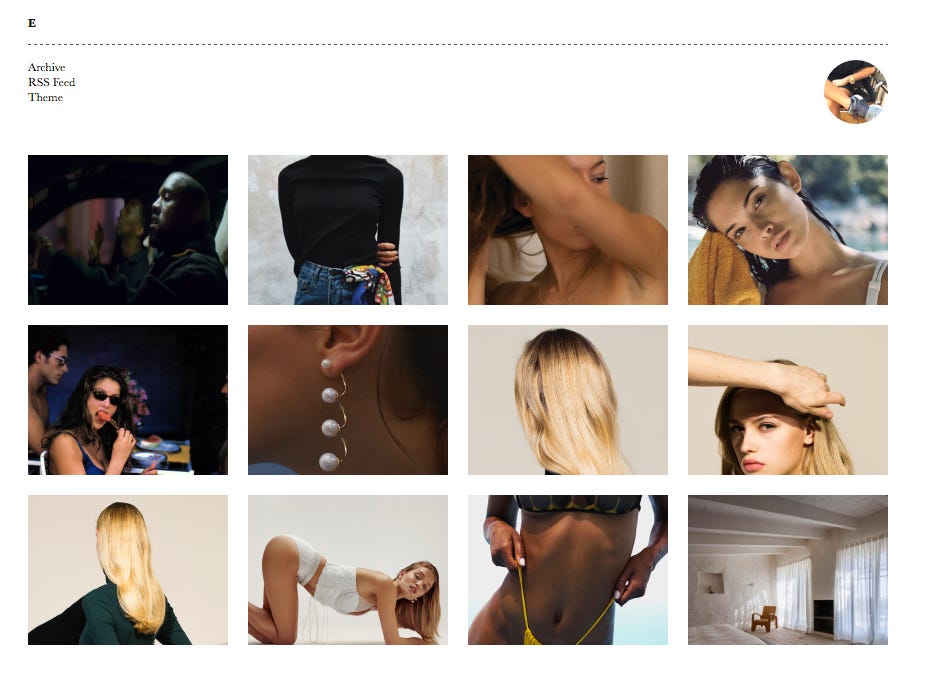
When it comes to good taste, you can’t explain what it is or why you have it, you either do or you don’t. It’s a feeling, a sensibility, a discernment that even those with a trained eye can only hope to achieve. Even now when trying to put it into words, I can’t. When you have good taste, you can identify if something inherently looks, feels, tastes or sounds good— and you can surely identify if it doesn’t.
For instance, I can’t explain why white cars (unless from 1980 or earlier) are inherently tacky, why a certain piece of furniture or tile choice screams “Pinterest”, why some vintage tees have a feeling and some don’t, why a vintage pair of Levi’s is only good if it’s faded in the exact right spots, why a chunky watch is cool on a girl, but cheesy on a dude. When something works and looks good, you just know. You can identify it, probably the way a genius can look at a complicated math equation and know the answer instantaneously. It either makes sense to you, or it doesn’t.
I’m not saying I have the best taste in the world, or that I’m the pinnacle of what good taste is. But do I think I have good taste? Yeah, I do. And while I’ve spend more than half of my life researching, studying and exploring different worlds, images and aesthetics, I believe the reason for my good taste is a combination of being genetically predisposed, and growing up with parents who also had good taste.
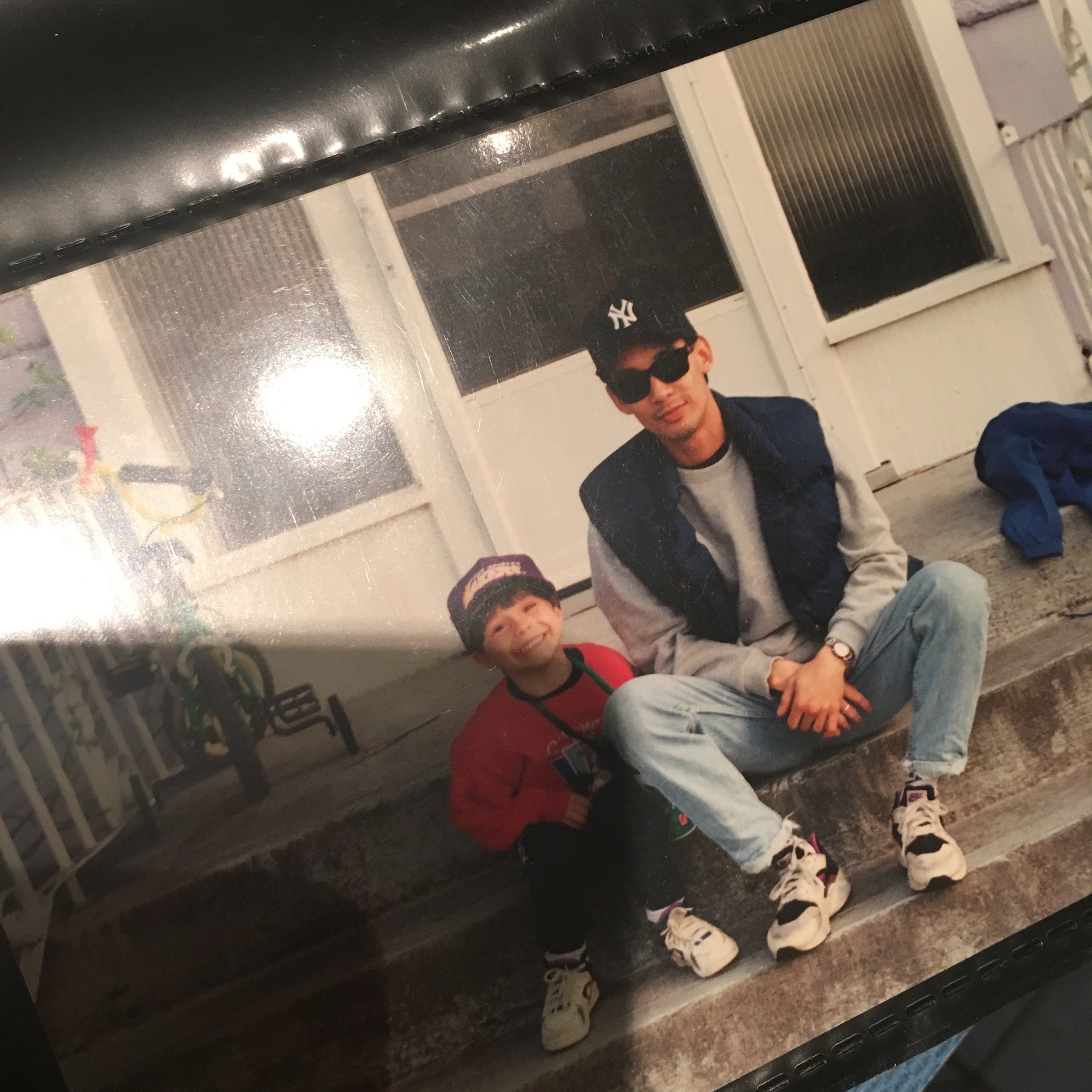
My dad is a first generation Filipino who moved to Canada as a child. My mum was American- born but lived in Canada her whole life. They both had normal jobs and came from families who worked their asses off to give them a good life. Their taste is also seemingly genetically passed down. With my mum, her taste is definitely in her cooking. My dad on the other hand, is far from a chef. But has always been stylish and heavily into clothes and shoes. From a young age he taught me what was cool and would tell me stories about the brands and pieces he wore. I remember when I was 12 or 13 he told me to never wear adidas and Nike at the same time. “You can never double team, it’s just the rules” he’d say. Growing up, he was a skater and into skate and streetwear culture. He still has the X-Large, Nike and Stussy pieces he wore when he was a teenager. Even now, his brand loyalty is second to none. He strictly wears vintage Levi’s, Arcteryx, Patagonia, Salomon, Nike and the occasional Supreme or Stussy hoodie (and Sporty & Rich of course). He always knew what was cool and wore it in a way that felt personal to him. He had his own taste and encouraged me to have mine.
Signifiers of good taste can vary. It can be obscene and ostentatious, or subdued and completely effortless. It can be the juxtaposition of two things that no one would ever think to combine, or an obvious representation of something so simple. There are certain nuances that AI could never consider.
I asked Claude, “How does Claude know what good taste is?” It’s answer? A surprisingly transparent one that only proves my point further.
“Honestly, I don’t have taste in the way a person does — no eyes, no lived experience walking into a room and feeling that a color palette is off. What I “know” is patterns.”
And that’s exactly right. Patterns, data and facts— all of which can curate good taste, but only to a certain extent. Sure, AI can tell you how to style a new skirt, how to build a brand identity, it can even help you source a vintage chair or piece of art. But it will never possess its own judgment or identity, because what it knows is based entirely on the information given to it by the millions of people that use it each day. But what’s missing from that equation is a feeling. A knowing that is just there, a visceral reaction and the understanding of an emotional choice vs a logical and calculated one.
Sure, AI might be making strides when it comes to cancer research, automating mundane tasks and compiling data in a fraction of the time a human ever could, but I still have hope that our industry will prevail and that the world will always have a place for those with resilience, emotional intelligence and of course, taste.
And while ongoing debates continue around which jobs AI will replace and which ones it won’t, one thing is clear— AI will never understand why you can’t wear Nike socks with adidas shoes.
As someone who works in big tech specifically with AI, Emily you are spot on. I tell people often that it’s just a tool to assist and not to replace. I spend more time explaining to AI when I’m working on something to get it to produce what I need. I can’t tell you how many times I’ve point out to AI that it was incorrect and to stop hallucinating. 😂
Well said. And that last sentence...took me out HARD.